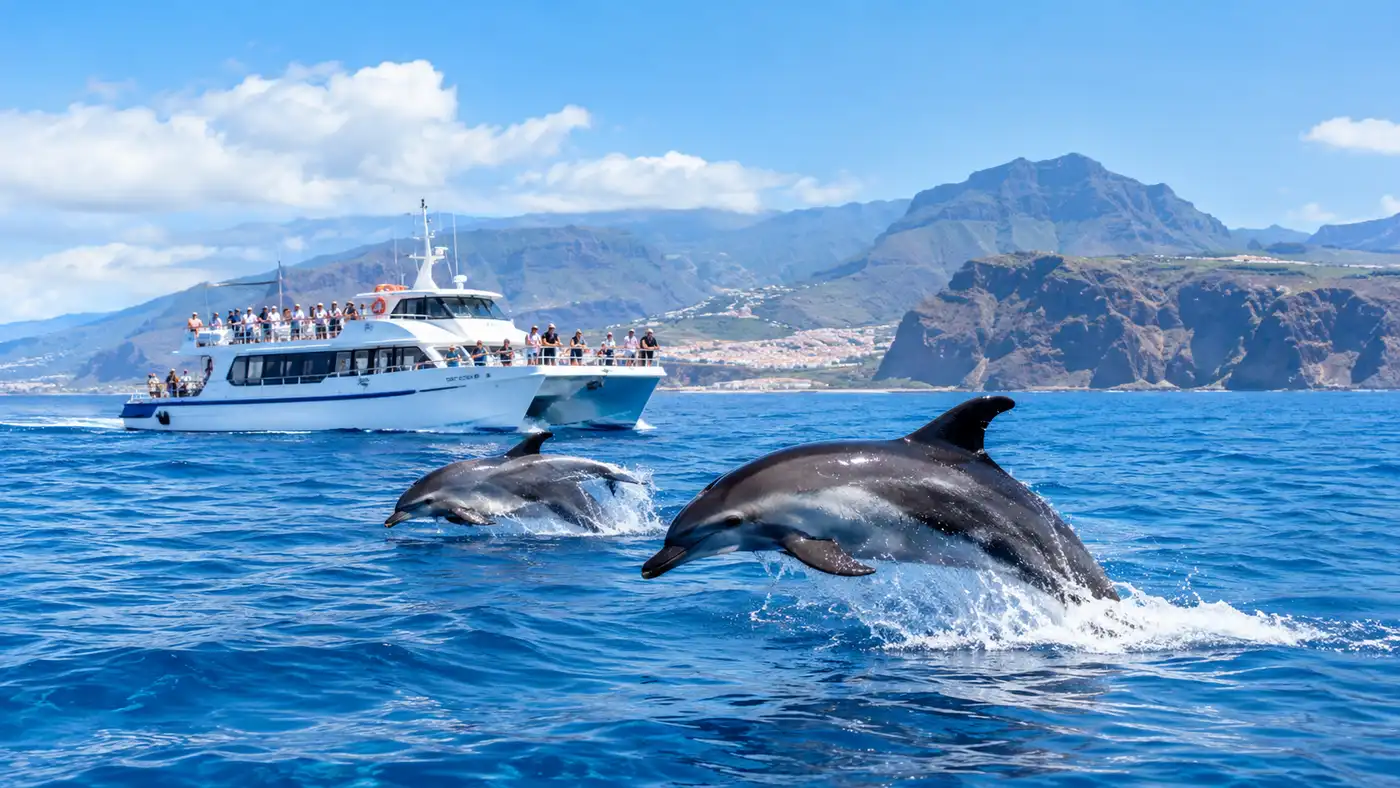
Whale and Dolphin Watching in Tenerife
You can stand on the beach in Playa de las Américas, look out across the water toward La Gomera, and have no clue that thousands of whales and dolphins are going about their day just three miles offshore. The channel between the two islands drops to depths of over 2,000 meters. Cold, nutrient-rich currents hit this sudden underwater cliff, pushing up squid and schooling fish in numbers that sustain massive resident colonies. If you book a whale watching tenerife excursion on any ordinary Tuesday, your odds of seeing short-finned pilot whales or Atlantic bottlenose dolphins are sitting right around 99%.
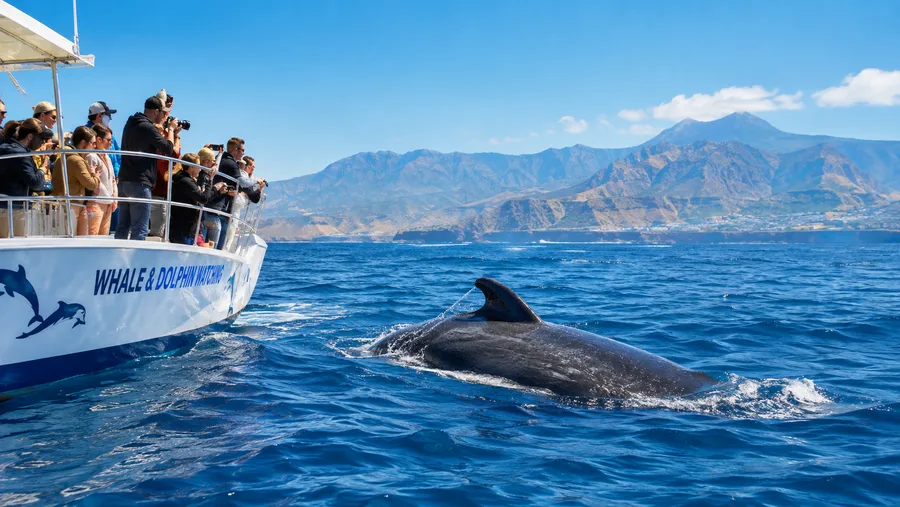
I have taken these boats at least eight times over the years. Sometimes the sea is flat like olive oil and you see dorsal fins slicing through the reflection of Mount Teide. Other times the trade winds kick up choppy whitecaps that send spray over the bow while a pod of twenty dolphins races your boat. It never gets old. Getting out on the water here requires a bit of practical know-how, though, because the harbor docks are lined with dozens of competing ticket booths, and not all tours operate with the same care for the animals.
Book your tenerife boat trips experience:
The Resident Pods: Why Whale Watching in Tenerife Is World-Class
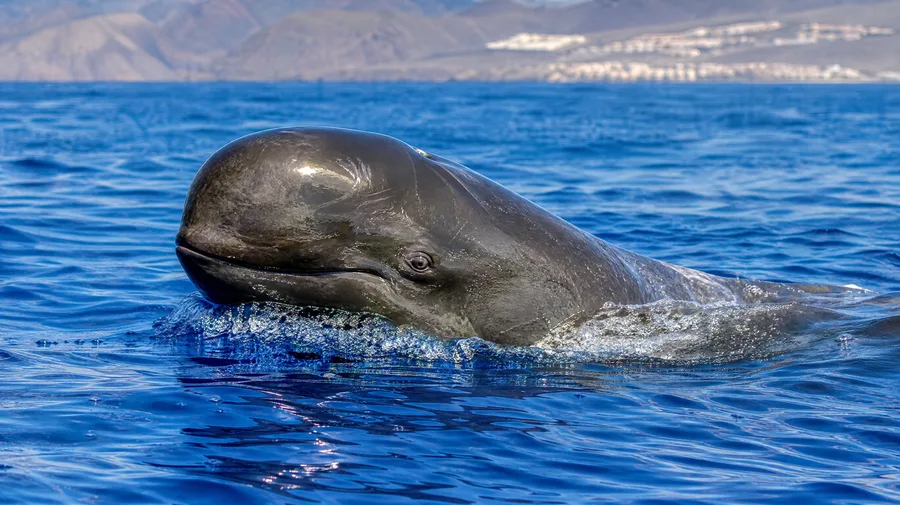
Most places in the world make you chase seasonal migrations. You cross your fingers, travel during a three-week window, and pray the pod did not swim past yesterday. The southwest coast of Tenerife is different. The marine strip running between Punta de Teno down to Rasca lighthouse is a designated Special Area of Conservation, home to roughly 300 resident short-finned pilot whales and several hundred bottlenose dolphins who live here 365 days a year.
Pilot whales are actually large oceanic dolphins, but their behavior feels entirely like that of whales. They grow up to six meters long, weigh up to three tonnes, and spend their daylight hours resting near the surface between deep hunting dives. You will often drift near a family group floating motionless side by side, a behavior known as logging. They exhale with an explosive, rhythmic puff that carries across the open water long before you actually spot the slick black curve of their backs.
The Atlantic spotted dolphins show up in spring and summer. They are smaller, wildly erratic, and possess an electric sort of energy. When a nursery pod enters the channel, you get calves leaping clean out of the water beside their mothers. You might also encounter rough-toothed dolphins, striped dolphins, and the occasional transient sperm whale cruising the deep trench. Tenerife whale and dolphin watching is not about catching a fleeting glimpse of a distant tail fluke; it is about floating in a calm bay while animals socialize within paddle-length of your vessel.
Pro tip: Take the earliest morning departure of the day, usually around 10:00 am. The afternoon trade winds tend to pick up after 1:00 pm, which makes the sea choppier and spotting dorsal fins much harder.
Can You Swim with Dolphins in Tenerife? The Law Explained
People search for swim with dolphins tenerife tours every single week. The short, honest answer is simple: no, you cannot, and anyone promising to let you jump into the water with them is selling an illegal trip. Spain enacted strict marine protection laws years ago that ban swimming with dolphins tenerife waters, touching wild cetaceans, feeding them, or chasing pods. The Teno-Rasca strip has even tighter restrictions enforced by the local coast guard.
The rules exist for very good reasons. Pilot whales and dolphins need rest periods during the day to conserve energy for hunting squid at depths of 800 meters at night. When swimmers slip into the water, mothers with calves get stressed, defensive, and burn precious calories avoiding human contact. A full-grown male pilot whale weighs thousands of kilos. Swimming near them in open water is not safe for you, and it disrupts animals that already deal with heavy maritime traffic from passenger ferries.
What legitimate boats do instead is combine wildlife viewing with an anchor stop in an isolated cove along the coast. After an hour or two of observing animals from the deck, the boat motors away to a spot like Diego Hernández bay or the sheltered waters near El Puertito. There, the skipper cuts the engines, lowers a swim ladder, and lets everyone jump into the crystal-clear turquoise water with snorkels. You will see green sea turtles, trumpetfish, and sea urchins tucked into the volcanic rock, but you will do so without harassing wild pods.
Note: Look for vessels carrying the official "Barco Azul" (Blue Boat) flag. This yellow-and-blue badge proves the crew has undergone environmental training and operates legally under strict distance and speed limits around cetaceans.
Choosing Your Dolphin and Whale Boat Trip: From Catamarans to RIBs
Head down to Puerto Colón in Costa Adeje and you will feel overwhelmed within thirty seconds. Ticket sellers stand along the marina ramps waving laminated photo cards of breaching humpbacks, shouting prices, and promising free drinks. It pays to know what you want before you walk through the gate. If you base yourself in the south, most Costa Adeje boat trips depart straight from Puerto Colón, though you will also find vessels sailing out of Los Cristianos harbor and Puerto Santiago.
Boats fall into three main categories: big double-decker catamarans, mid-sized sailing yachts, and rigid inflatable boats (RIBs). Large catamarans carry anywhere from 50 to 100 people. They are very stable, have shaded downstairs seating, proper flushing toilets, and wide nets suspended above the water where you can lie down. They are great for families with small kids or anyone who gets seasick looking at a bathtub. The downside is obvious: you share the railing with 80 other people holding smartphones.
Small sailing yachts and catamarans carry a maximum of 10 to 12 passengers. The atmosphere is quiet, personal, and relaxed. The skipper usually cuts the diesel engine as soon as the sails go up, meaning you drift near the pilot whales without mechanical rumble overhead. RIBs - the rubber-sided speedboats - offer a fast, bumpy ride right at water level. They cover ground quickly, but your lower back will feel every wave, and there is zero shade under the midday sun.
| Boat Type | Average Capacity | Typical Duration | Average Cost | Best For |
|---|---|---|---|---|
| Large Shared Catamaran | 50 - 100 passengers | 2 to 3 hours | €25 - €42 | Budget travelers and families |
| Mid-Sized Sailboat | 8 - 12 passengers | 3 hours | €60 - €85 | Quiet, respectful observation |
| Rigid Inflatable (RIB) | 10 - 16 passengers | 2 hours | €35 - €50 | Quick sightings and thrill seekers |
| Eco-Yacht with Hydrophone | 10 - 12 passengers | 3 to 4 hours | €75 - €110 | Wildlife enthusiasts and photographers |
Up north near the giant cliffs, boat trips leaving from Los Gigantes give you a totally different backdrop. Instead of looking back at resort hotels, you sit beneath sheer volcanic walls that plunge 600 meters straight down into the sea. Seeing a pod of dolphins break the surface against those dark basalt cliffs is one of the most stunning sights anywhere in the Canary Islands.
Book your tenerife boat trips experience:
What a Whale and Dolphin Boat Trip in Tenerife Actually Looks Like
Most tours run either two, three, or four hours. The two-hour option is purely about finding animals and heading straight back. It works well if you have impatient toddlers or an easily unsettled stomach. But the three-hour trip is the sweet spot. It gives the skipper time to motor four miles out into the channel, spend forty-five unhurried minutes tracking pods, and still leave an hour for anchoring in a quiet bay for lunch and a swim.
The boat slips out of the harbor past breakwaters lined with fishermen casting for sea bream. The skipper checks the radio; captains share coordinates when pods surface, though the best guides spot the birds first. Shearwaters and yellow-legged gulls flock together over bait balls, creating a noisy aerial beacon that signals predators are feeding below. Within twenty minutes, the engine drops to an idle. The sound of running water against the hull takes over.
Dolphins in Tenerife often swim right to the bow. They use the pressure wave created by the hull to glide effortlessly through the water, rolling sideways to make direct eye contact with people leaning over the railing. You can hear their blowholes opening and snapping shut with a sharp hiss. If the boat has an underwater hydrophone, the crew will drop the microphone over the side and hook it up to deck speakers. The clicks, squeals, and whistles of the pod echoing through the water will give you goosebumps.
After wildlife time wraps up, the captain sets course toward the coastline. On three-hour runs, they hand out sandwiches, cold beer, and soft drinks while dropping anchor in turquoise shallows. You jump off the stern into cool water that washes off the salt spray and sunscreen. You dry off on the ride back while the afternoon sun warms the deck, watching Mount Teide loom over the south coast.
Planning Tips: Booking, Seasickness, and Seasons
Whale trips in Tenerife run every single day of the year, weather permitting. Winter brings migrating fin whales and occasional humpbacks, while summer delivers calm seas and large pods of spotted dolphins. There really is no bad month. The real variable is the Atlantic swell, which can catch people off guard on days that look calm from your hotel balcony.
- Motion sickness remedy: take your pill 45 minutes before stepping aboard the boat. Taking it once you already feel green does nothing because your stomach has stopped absorbing it.
- Footwear choices: wear flat shoes with white or non-marking rubber soles. Most sailing yachts will ask you to take your shoes off completely and store them in deck bins.
- Sun defense: the sea breeze tricks your skin into thinking it is cool, but UV reflection off the water will fry your face in an hour. Bring zinc sunscreen, sunglasses with a neck strap, and a secure hat.
- Timing matters: book mid-week departures if you can. Saturdays and Sundays bring lots of locals onto the water in private boats, which makes the harbor busier and marine encounters more crowded.
I always tell friends to book an eco-focused boat that uses an electric motor or sails whenever possible. These boats produce less underwater acoustic pollution, which makes a huge difference to animals that hunt and communicate purely via echolocation. You will spend slightly more per ticket, but the quality of the encounter is worlds apart from the party catamarans blaring loud club music.
Frequently Asked Questions about whale watching tenerife
What is the best month for whale watching in Tenerife?
Every month is fantastic because short-finned pilot whales and bottlenose dolphins reside here year-round. If you want calmer seas and warm swimming stops, May through October offers the gentlest waters. For a chance at seeing migratory baleen whales like fin whales or sei whales, book between November and February.
Can you see orcas in Tenerife?
Orcas are very rare around the Canary Islands. They occasionally pass through the archipelago following bluefin tuna migrations in the spring, but sightings are unpredictable and happen only a handful of times per year. You should not book a trip expecting to see killer whales.
How much do dolphin boat trips in Tenerife cost?
Budget-friendly large catamarans start around €25 to €35 per adult for a standard two-hour excursion. High-end sailing tours with small groups, lunch, drinks, and snorkel gear cost between €60 and €90 per person. Private charters usually start around €350 for three hours.
Quick Reference
- Resident species: pilot whales and bottlenose dolphins year-round
- Departure harbors: Puerto Colón, Los Cristianos, Los Gigantes
- Average sighting rate: over 95% on certified tours
- Regulations: strictly no swimming with wild cetaceans
Book your tenerife boat trips experience:
The Bottom Line
Getting out on the water to watch a family of pilot whales breathing peacefully in the shadow of Mount Teide is the single best thing you can do on this island. Skip the theme park animal shows, avoid the party boats blasting bass through the marine reserve, and choose a certified Blue Boat with a naturalist onboard. Step onto the dock with an open mind, keep your eyes on the horizon for that first puff of mist, and enjoy one of the wildest corners of the Atlantic Ocean.
Read more about tenerife boat trips.